The complete customer system for concrete contractors
Show the site. Set the scope. Keep the project moving.
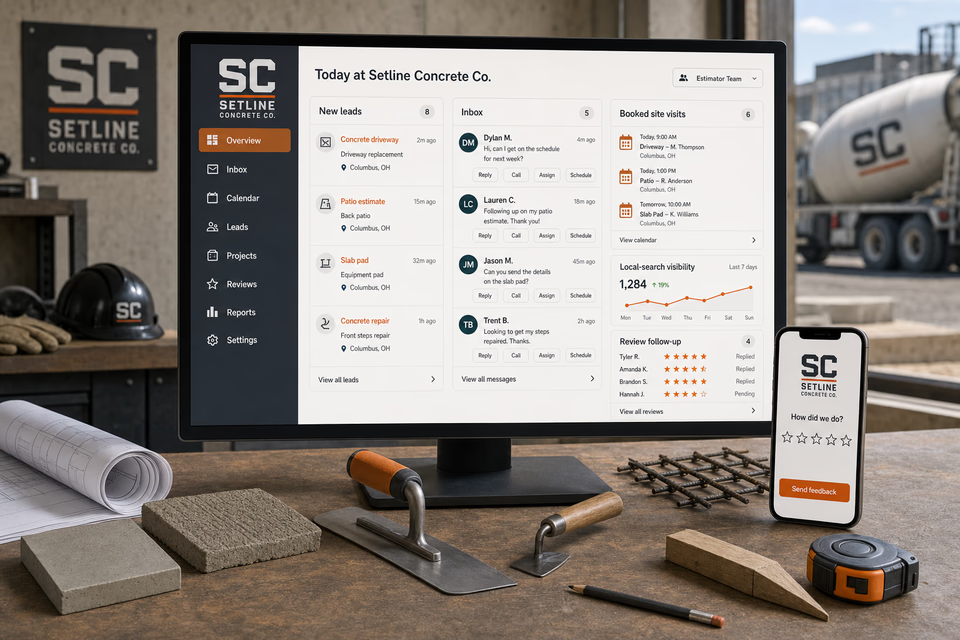
Concrete customers rarely need a useful answer from one measurement alone. They bring a use case, an existing surface, access constraints, finish preferences, grade questions, and a schedule to coordinate. We connect the website, calls, messages, local search, reviews, and follow-up so the site details, estimate, selections, and project record stay together.
Setline Concrete Co.Website, response, search, reviews, and follow-up
What the complete setup should do
Be useful before, during, and after the service call.
Concrete demand moves between driveway replacement, planned patios and walkways, new slabs and pads, commercial flatwork, and repair assessments. The system should make each project type clear while collecting enough site information for an informed visit.
01
Start with the site and intended use
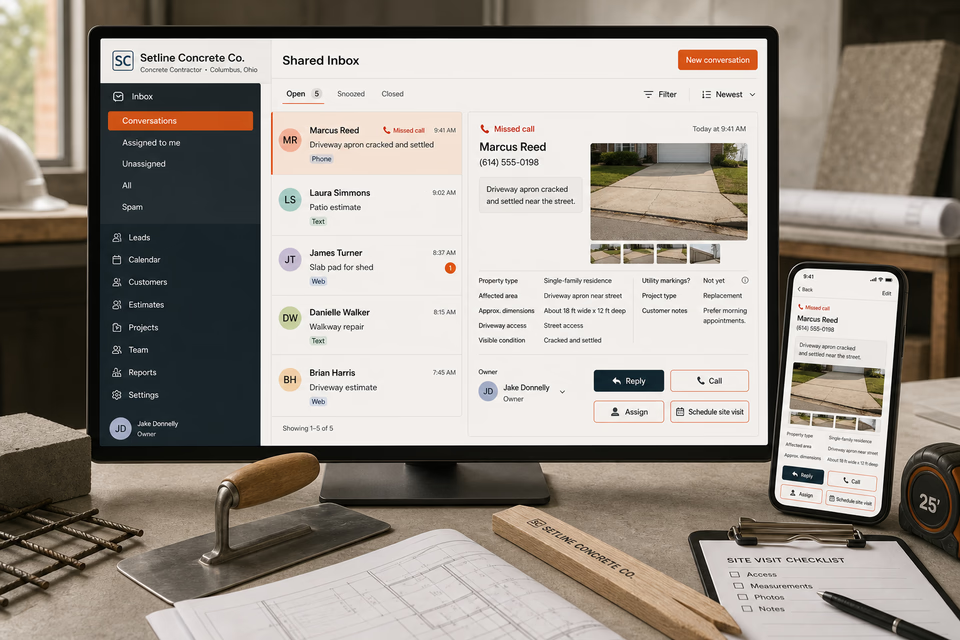
A useful inquiry identifies the property, project type, approximate area, current surface, intended use, access, and any visible grade or edge conditions. Those details help the office prepare a focused site visit.
02
Qualify demolition, forms, finish, and access
Photos, drawings, removal questions, equipment access, finish preferences, adjoining surfaces, and known utility-marking status should stay with the lead instead of being reconstructed from separate calls and texts.
03
Keep decisions attached to the estimate
Site notes, proposed scope, finish and color selections, joint-plan discussion, scheduling updates, and customer approvals should remain in one record as the project moves from visit to accepted work.
04
Close out with a project-specific record
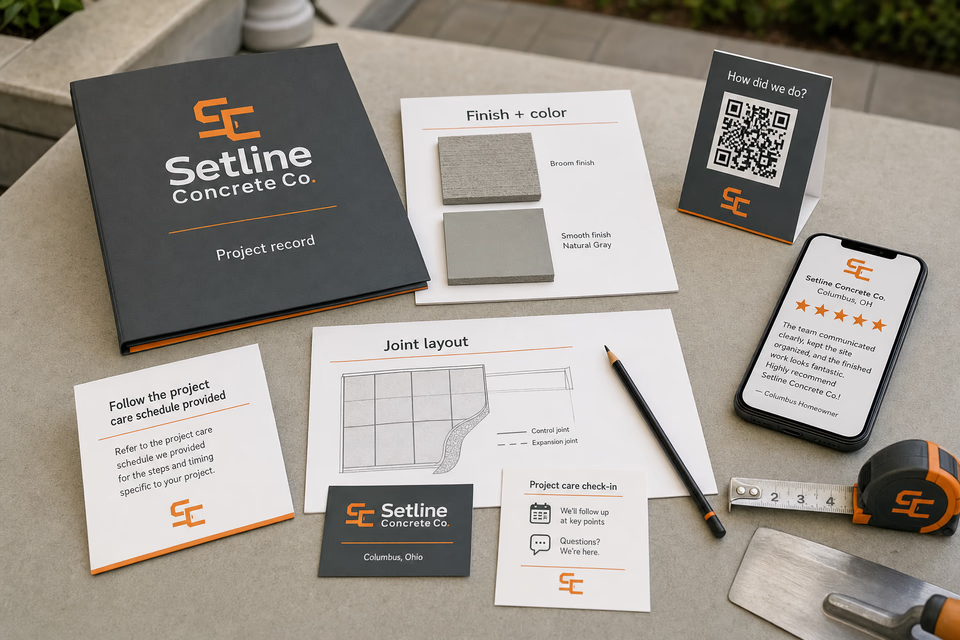
A clean closeout can record the selected finish and color, the documented joint layout, the contractor's project-specific care schedule, feedback, and an optional future check-in.
The concrete system
Three parts. One customer journey.
Each part is built around concrete driveways, patios, walkways, slabs, pads, steps, and repair work, and every service below links to the full explanation of what it does.
01
Get found for the surface they are planning
Match each search to the right concrete project and proof.
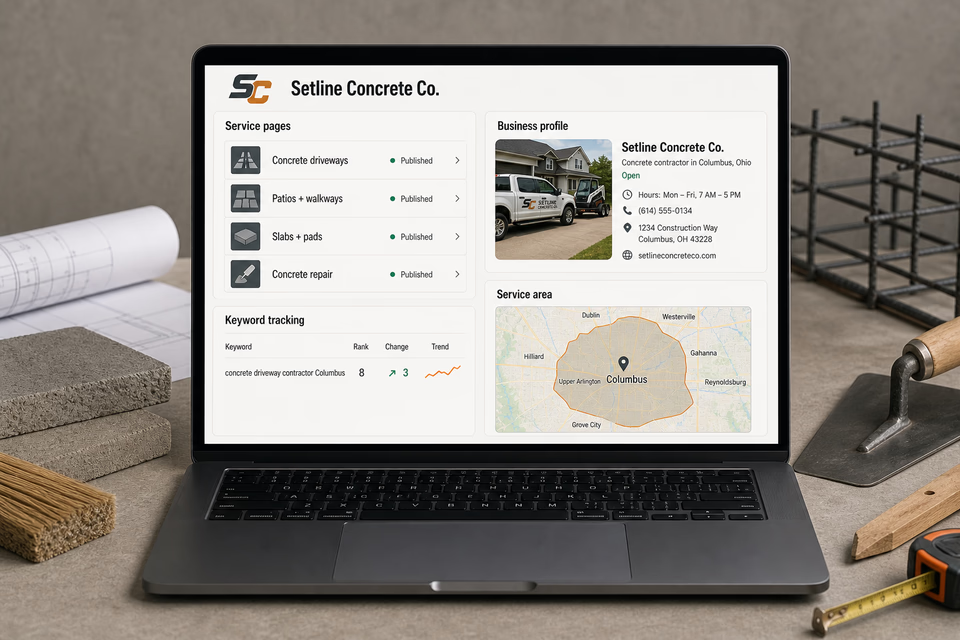
Build useful pages around driveways, patios, walkways, slabs, pads, steps, decorative finishes, commercial flatwork, repair assessments, and the communities you truly serve. Connect local search and ads to the relevant project page instead of one broad construction claim.
Keep missed calls, property photos, and scope details together.
A missed call can become a normal text conversation. The affected area, intended use, approximate dimensions, access, current condition, customer photos, known utility-marking status, owner assignment, and site-visit time stay in one record.
Make the completed work easier to review, reference, and follow up.
Provide a concise project record, document the finish and color, preserve the agreed joint layout, share the contractor's project-specific care schedule, make feedback easy, and offer restrained check-ins to customers who agreed to hear from you.
Driveways, patios, walkways, slabs, steps, decorative finishes, and repair assessments involve different site conditions, forms, access, finishing choices, and proof. Focused pages help property owners identify the relevant project and request the right next conversation.
Concrete driveway installation
Driveway removal + replacement
Concrete patios + walkways
Garage + accessory-building slabs
Shed + equipment pads
Concrete steps + stoops
Concrete repair + replacement assessments
Stamped + decorative concrete
Commercial flatwork
Foundation walls + footings
Service-area pages for the communities you really serve
From search to the next job
The handoffs are the whole point.
The website should not end at a form, and a completed job should not end at an invoice. Each useful step gives the next person context.
01
They find the right service
A useful page or local listing matches the problem and gives the customer one obvious way to act.
02
The request stays alive
The call, form, or message lands in the same customer record with the service, location, and conversation attached.
03
A person owns the next step
The owner or office can reply, call, qualify, assign, and schedule with the history already in front of them.
04
The finished job keeps working
Feedback, reviews, print, referrals, and useful customer follow-up help one completed job create the next opportunity.
Concrete contractor questions, straight answers
Clear scope. Visible process. No crack-free promises.
01Is a concrete contractor separate from a general contractor or mason?
Often, yes. Concrete contractors may specialize in excavation coordination, base preparation, forms, reinforcement, placement, finishing, and joints for concrete work. General contractors, masons, landscapers, and other trades may coordinate with that scope, but the website should describe only the services the company actually provides.
02Can the site promise concrete will never crack or settle?
No. The site can explain the contractor's site review, preparation, placement, finishing, and joint-planning process, but it should not promise that a concrete surface will never crack, move, discolor, or be affected by site and weather conditions.
03What details make a concrete project inquiry useful?
Ask for the address, intended use, approximate size, current surface, access, adjoining edges, number of steps if relevant, desired finish, known utility-marking status, photos, and any drawings. Final measurements and scope should be confirmed on site.
04Should every concrete service have its own page?
Only for work the contractor genuinely performs. Driveways, patios, slabs, steps, decorative finishes, commercial flatwork, and repair assessments have different buyer questions, job photos, intake details, and next steps, so focused pages are useful when each service is real.
Want to see the complete setup for your concrete contractor?
Bring the old site. Or the lack of one.
We will show you how the website, calls, messages, local search, reviews, and follow-up can work as one practical customer system.