You are allowed to miss a call. You are on a job, not chained to a reception desk. The useful part is opening the conversation while the caller still remembers why they called.
Why this exists
Voicemail is not much of a follow-up plan.
Some callers leave a message. Plenty do not. A quick text can ask what they need, set an expectation, and keep the thread open until you are free to answer properly.
What this looks like
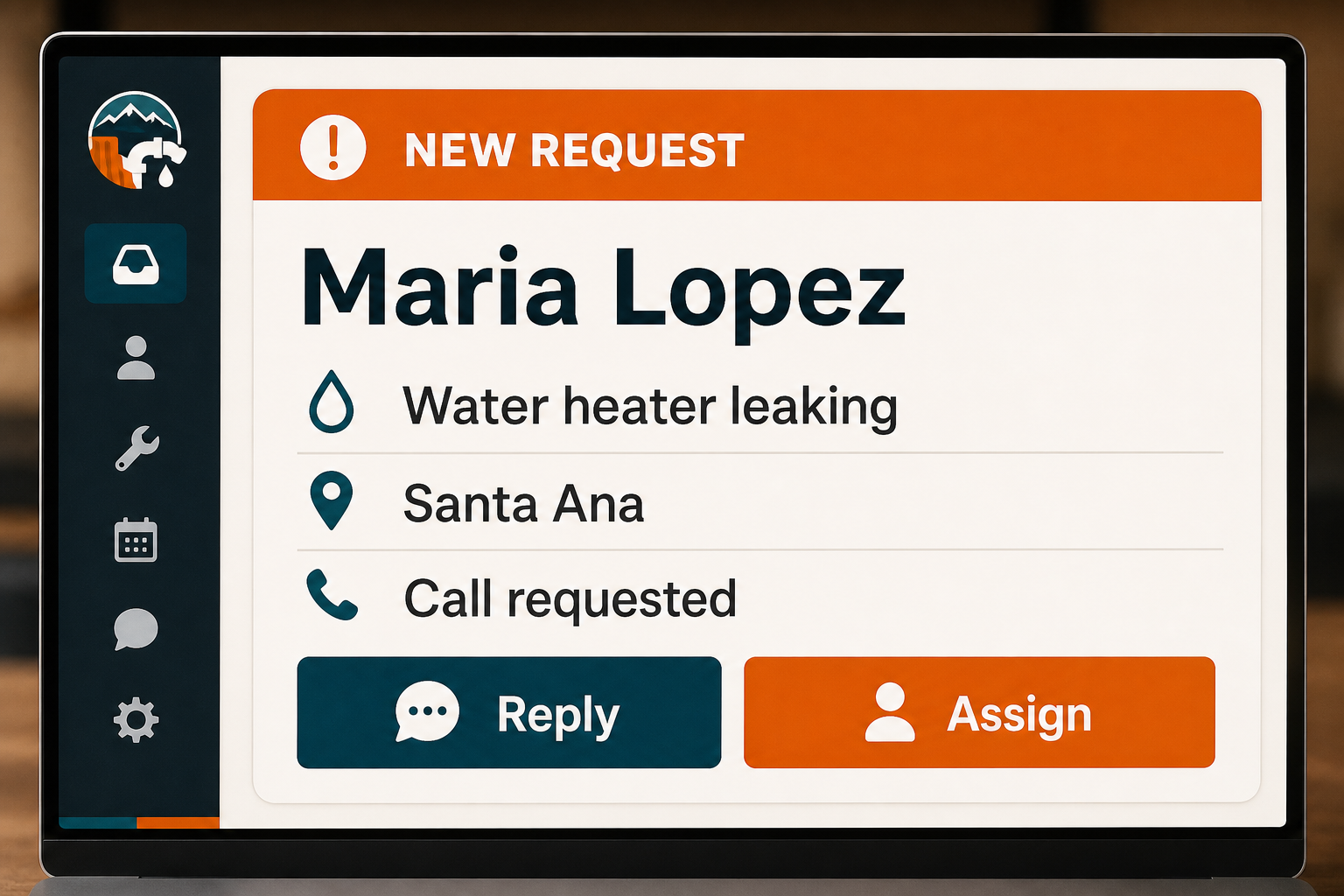
The caller sees a normal text. You see the whole thread.
This is a simple bridge between a missed call and the real callback—not a robot trying to run the job.
01 · Missed call
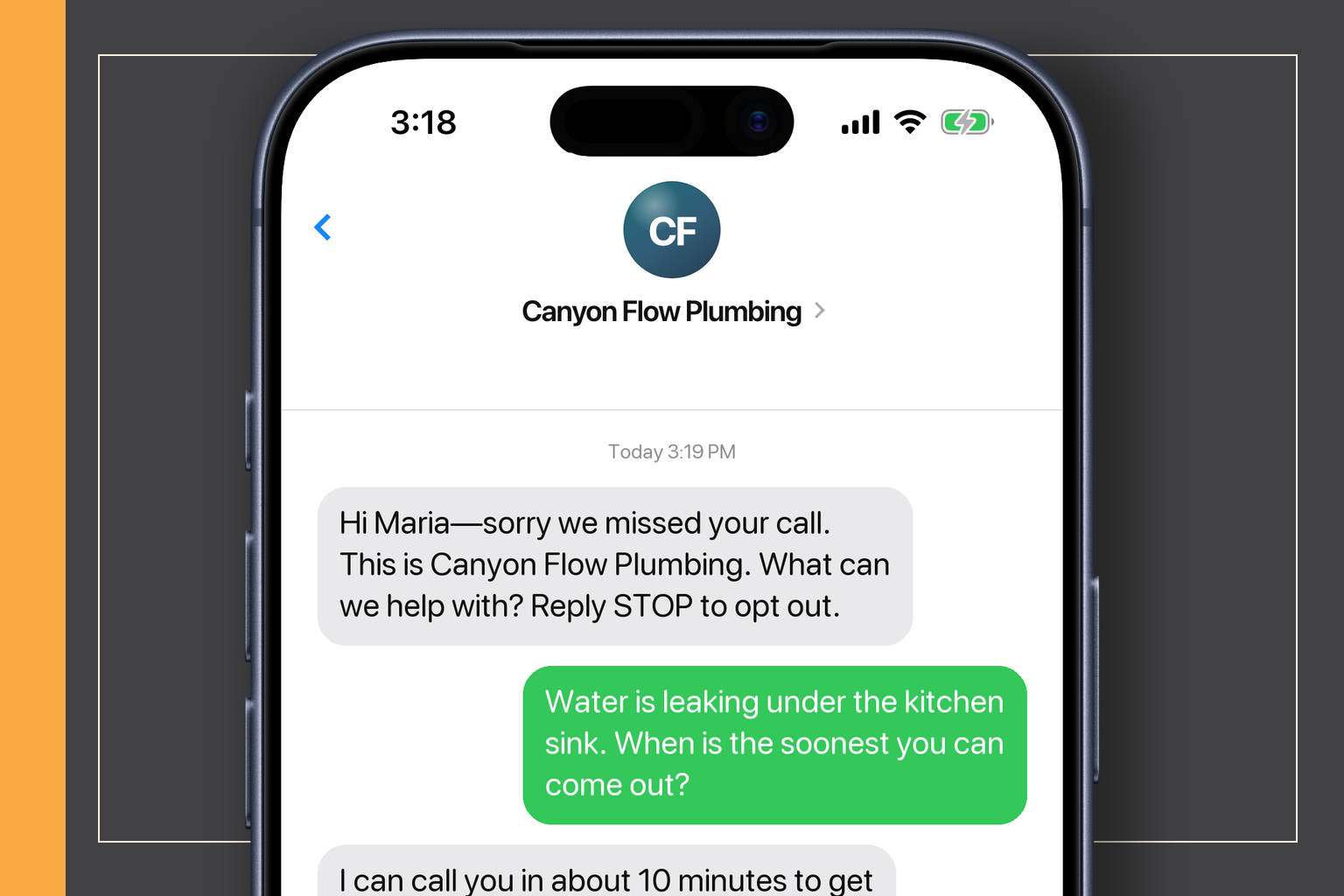
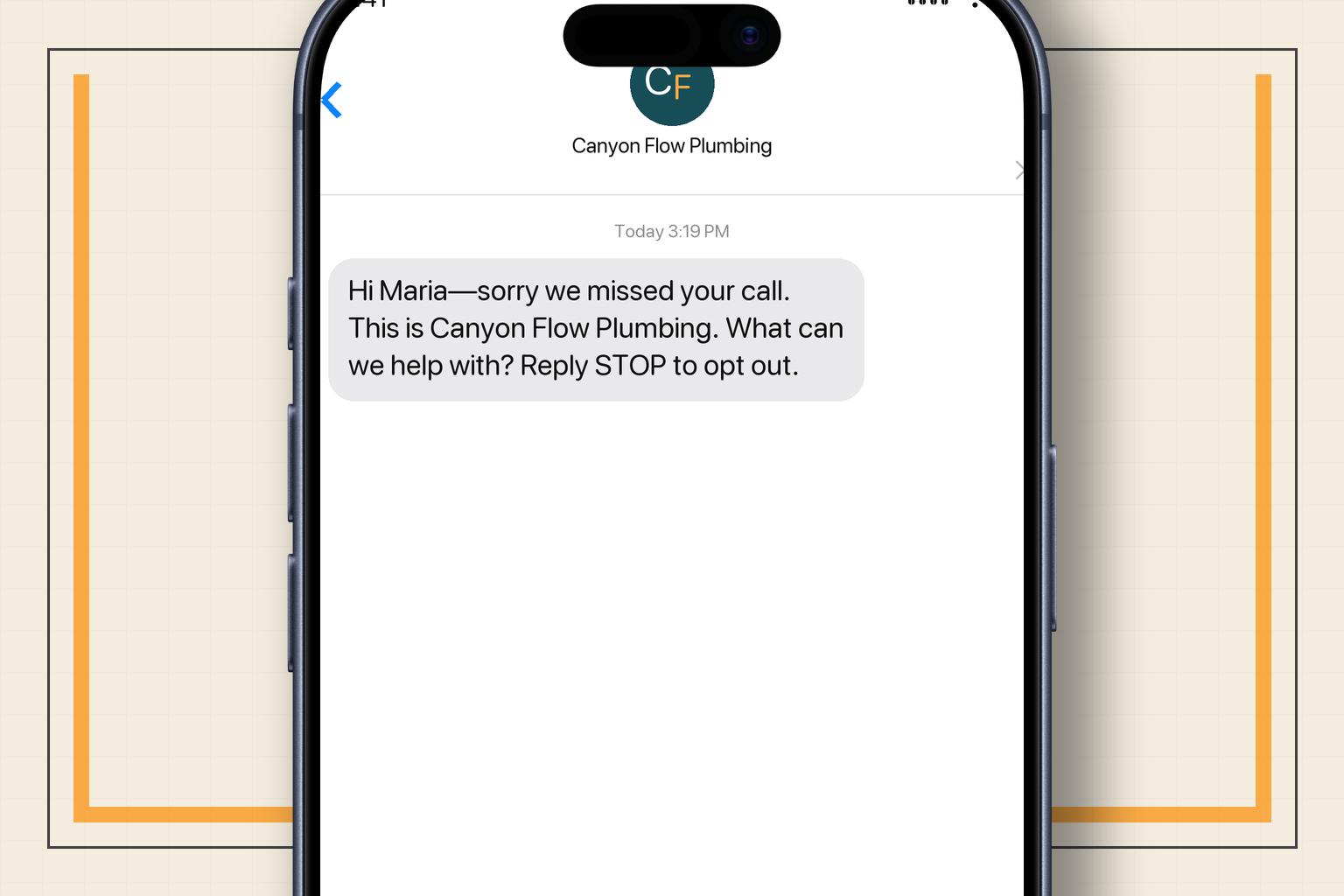
The text says who you are and why it showed up.
When the call and your rules allow it, the caller gets one clear message from the business number asking what they need.
Business name included
One useful question
Clear opt-out
02 · Customer reply
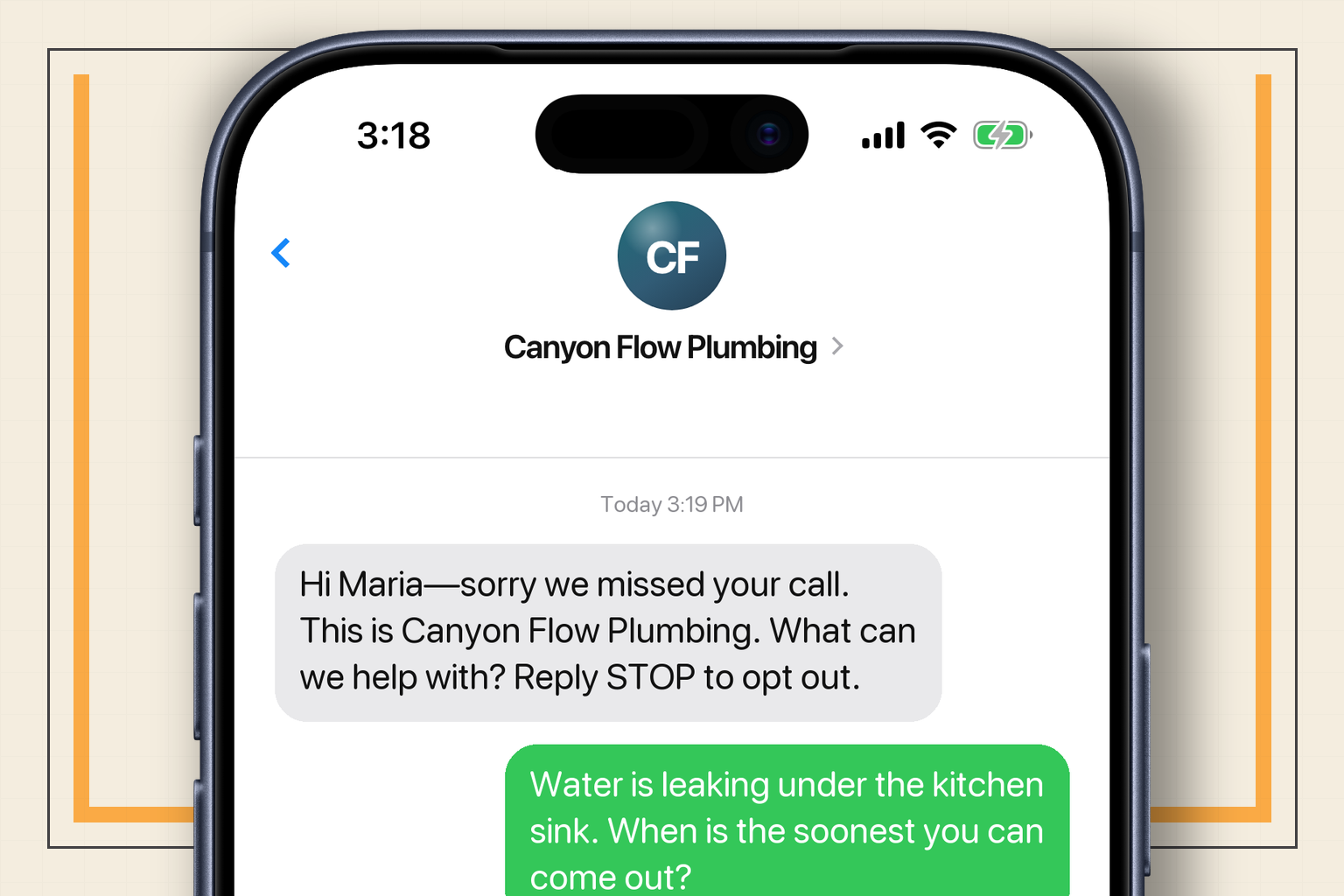
They can tell you what is wrong.
Maria says water is leaking under the kitchen sink and asks how soon somebody can come out. You know what the call is about before you pick up the phone.
Normal text reply
Photos can stay with the thread
No phone-tree nonsense
03 · Callback
You take it from there.
The call and text stay together so you or the office can answer, qualify the request, and schedule the work like normal.
Call and text in one thread
A real person replies
After-hours rules stay honest
How it actually works
From setup to a real customer conversation.
01
Call is missed
The business number records the call and checks the rules.
02
A short text goes out
The message says who you are, acknowledges the missed call, and asks how you can help.
03
The caller replies
Their answer appears in the same inbox as the call.
04
A person takes it from there
You respond, qualify the request, and schedule or decline the job like normal.
What is included
Everything you need to get started.
The exact setup follows the business, but this is the working scope behind the service—not a pile of vague “optimization” line items.
Business-number call routing
Missed-call detection
Business-hours and after-hours messages
Shared call and text thread
Team notifications
STOP handling
Mobile and desktop access
Basic call-source visibility
Good fit
Yep.
You miss calls because you are driving, on a ladder, with a customer, or simply trying to finish the work.
Bad fit
Nope.
You want the first automated text to quote complicated jobs, pretend to be human, or keep messaging after somebody opts out.
Questions people actually ask
Straight answers before the sales call.
01Does every missed call get a text?
Only calls that meet the rules. We can account for repeat calls, blocked numbers, business hours, and other practical exceptions.
02Can I use my current number?
Sometimes. Number options depend on your current carrier and setup. We will map the cleanest path before changing anything.
03What does the text say?
Something plain: who you are, that you missed the call, and a simple question about what they need. No fake ‘our agents are standing by’ nonsense.
04Can customers opt out?
Yes. SMS opt-outs are honored, and the message setup includes the required handling.