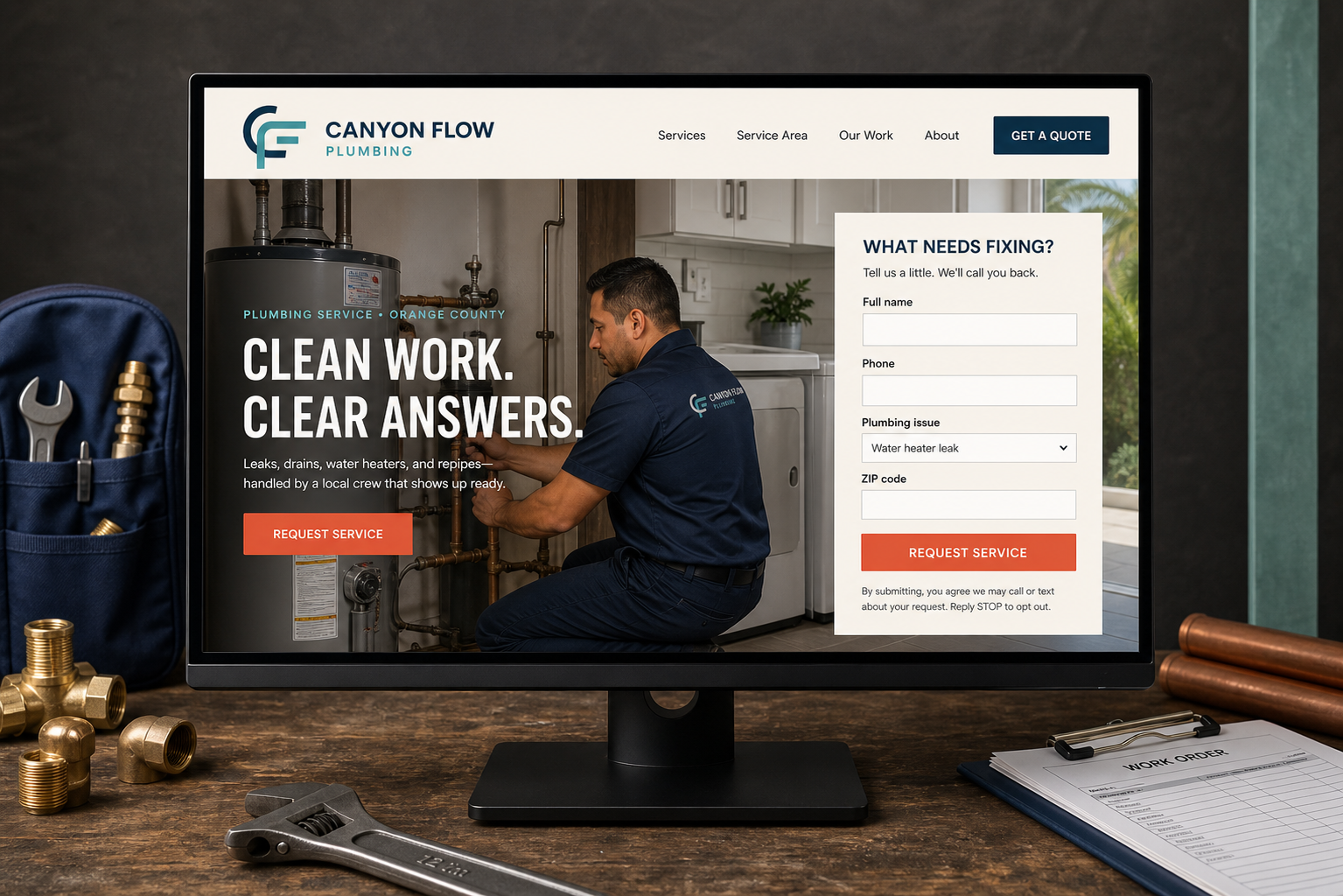
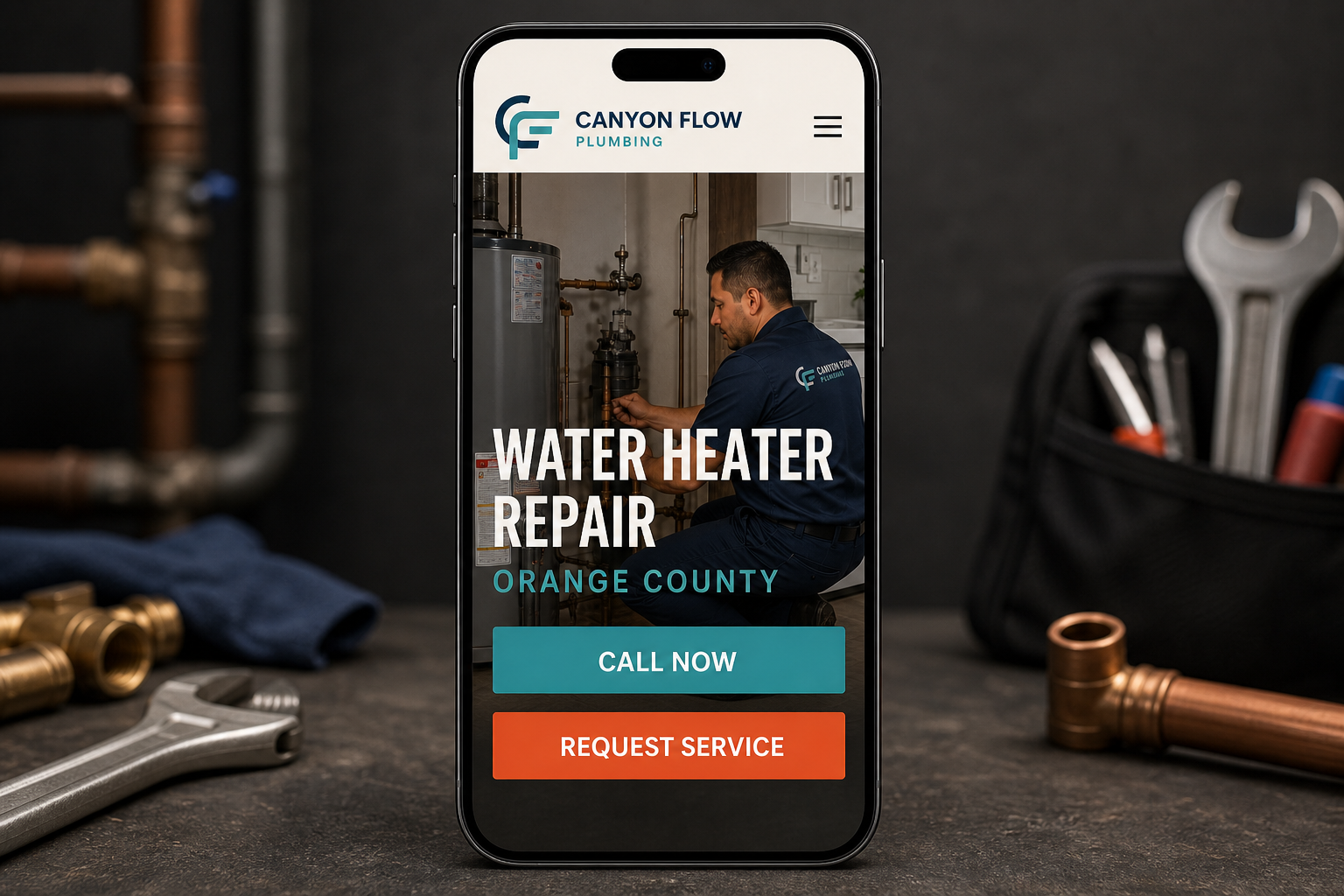
Your site should make three things obvious: what you do, where you work, and how to ask for a quote.
Why this exists
Your website should carry its share of the load.
A lot of contractor sites are one old homepage, a phone number hidden in the footer, and six stock photos everybody has seen. That makes customers work too hard. We organize the information around the questions they actually ask and build the site for the phone already in their hand.
What your customer actually uses
The parts that help somebody hire you.
A good contractor website answers four simple questions: What do you do? Do you work here? How do I reach you? What happens next?
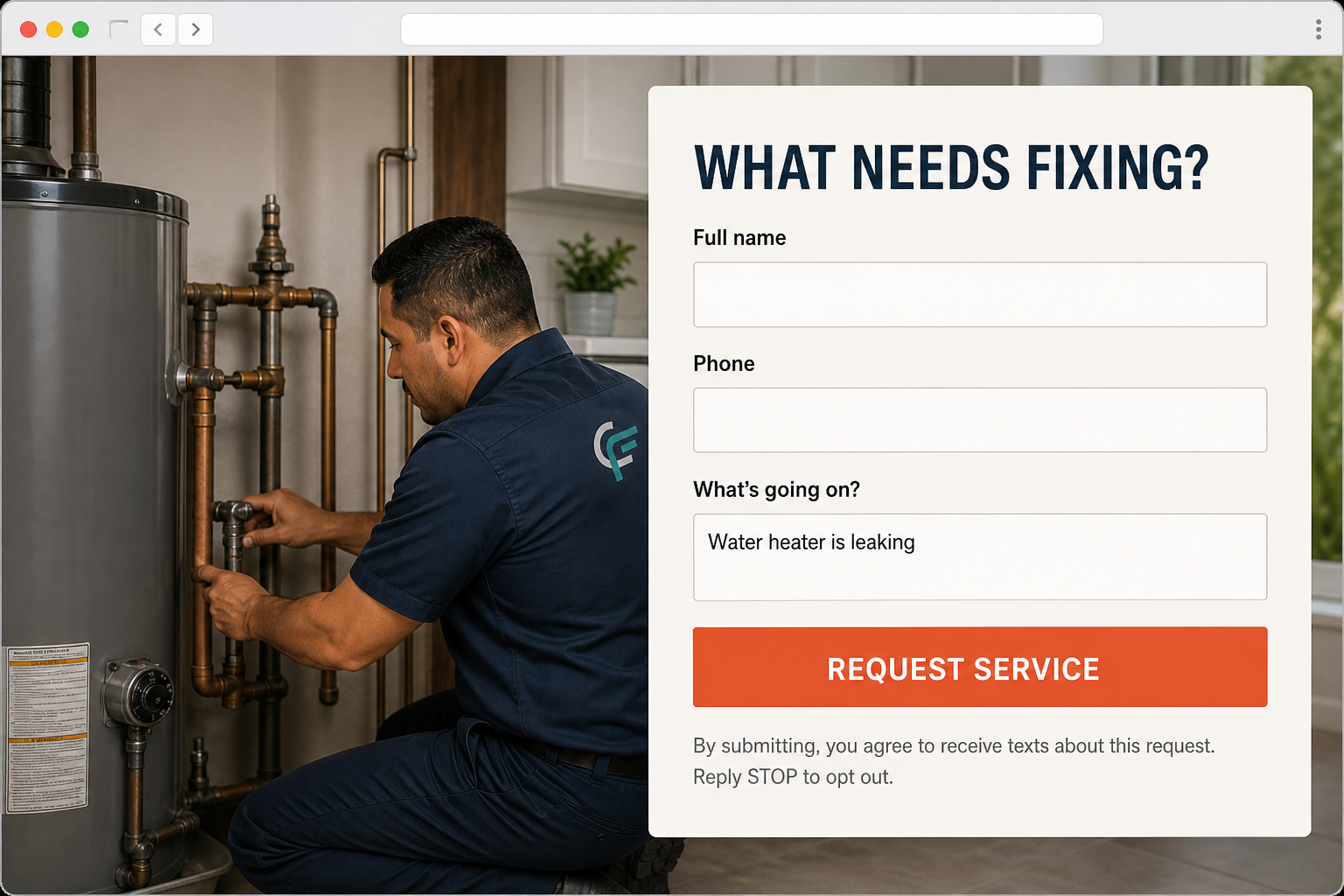
01 · Lead capture form
The form gets the job details.
A customer can tell you who they are, how to reach them, and what is going wrong. You get enough information to call back without starting from zero.
Name and phone
Job type and problem
Clear permission for follow-up
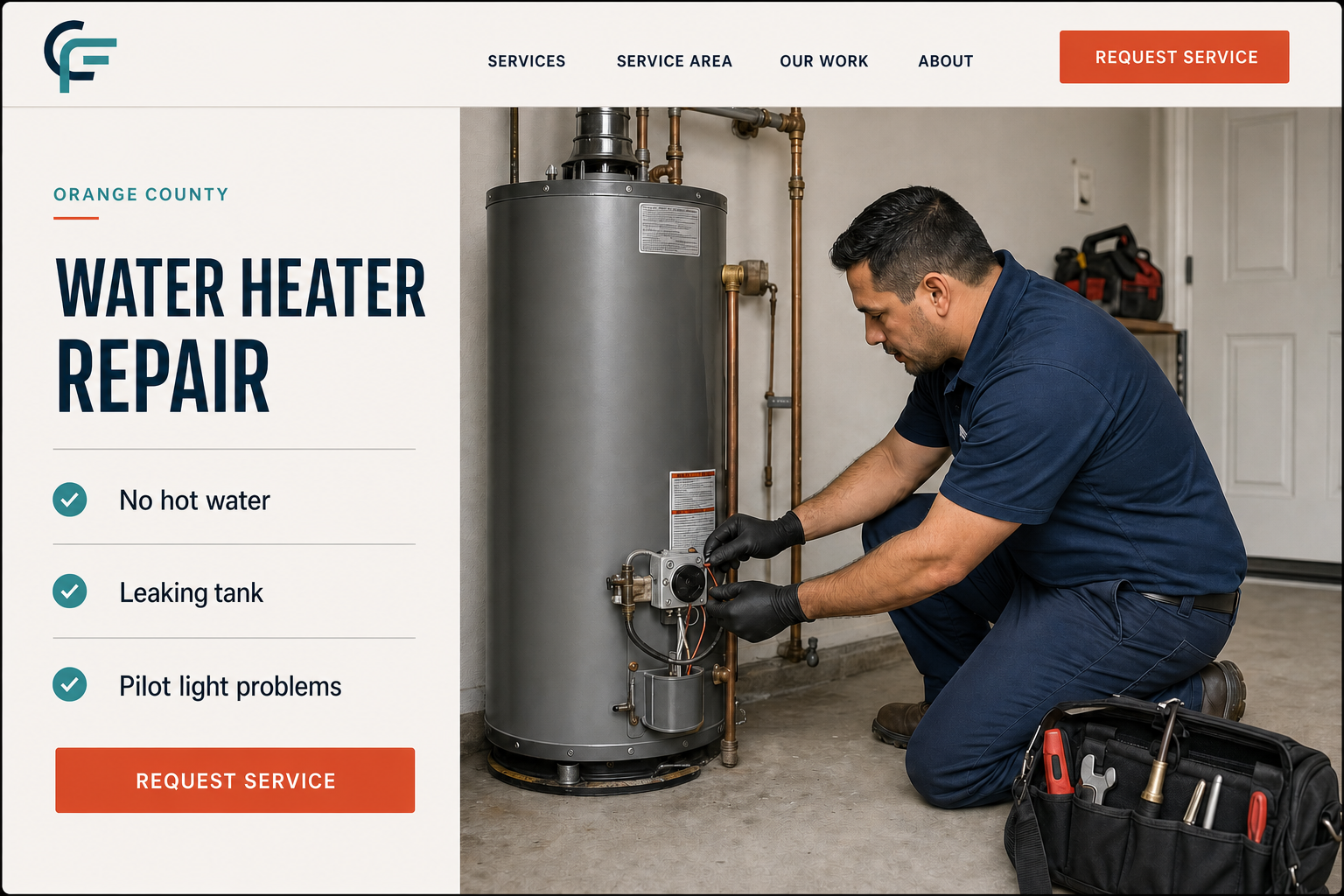
02 · Service details
Each main service gets a clear page.
A water-heater customer should land on a water-heater page—not a homepage that makes them hunt. The page explains the job, shows real work, and gives them one obvious next step.
Plain service details
Real job photography
One clear request button
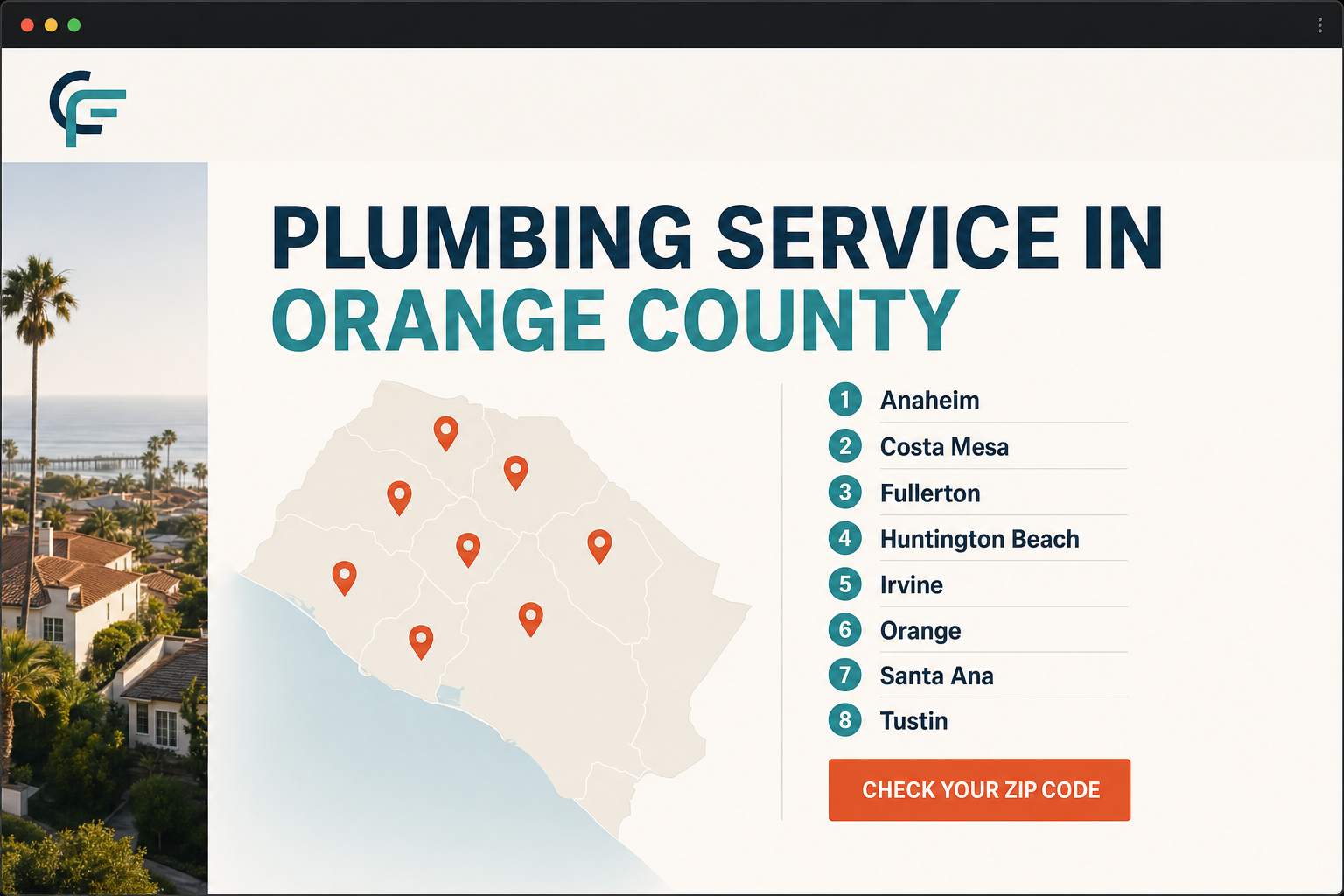
03 · Service area
People can see where you work.
Customers should not have to call just to ask whether you cover their town. We make the service area easy to find and build useful local pages where they make sense.
Cities you actually serve
Useful local information
No guessing about coverage
04 · Mobile website
Calling or asking for a quote is easy on a phone.
Most customers are not studying your site at a desk. The phone version keeps the words readable and puts call and quote buttons where a thumb can reach them.
Tap to call
Short quote form
No pinching or tiny type
How it actually works
From setup to a real customer conversation.
01
Get the facts
You give us the services, service area, photos, contact details, and the stuff customers ask all week.
02
Write and build
We organize the pages, write the plain-English copy, build the mobile layout, and connect the forms.
03
Check the whole thing
We test the phone links, forms, tracking, mobile layout, and the immediate acknowledgement.
04
Launch and improve
The site goes live, then we keep the important information current instead of forgetting it exists.
What is included
Everything you need to get started.
The exact setup follows the business, but this is the working scope behind the service—not a pile of vague “optimization” line items.
Typically 10–20 useful pages
Mobile-first responsive design
Service and service-area page structure
Estimate and contact forms
Tap-to-call and text actions
SSL, metadata, image optimization, and basic schema
Immediate form acknowledgement
Connection to the Worker Websites inbox
Good fit
Yep.
You do solid work, your current website is weak or missing, and you can provide basic business details plus real job photos.
Bad fit
Nope.
You want a guaranteed Google position, a magic lead faucet, or a six-month brand workshop before anybody writes a page.
Questions people actually ask
Straight answers before the sales call.
01How many pages do I need?
Most contractor sites land between 10 and 20 pages. The right number depends on your services and service area—not on hitting an arbitrary page count.
02Do I need professional photos?
No. Real phone photos from completed jobs are usually more useful than fake crews in stock images. We will tell you what shots would help.
03Can I update the site later?
Yep. Services, areas, photos, offers, and basic company information can all be updated as the business changes.
04Does a new site guarantee leads?
No. A better site gives referrals, search visitors, and ad traffic a clearer place to act. Traffic and results still depend on your market, reputation, advertising, follow-through, and the quality of your work.