The complete customer system for drywall contractors
Show the finish. Scope the surface. Keep every wall and ceiling detail attached.
Drywall work can be a single repair, an occupied-home remodel, a full new build, or a phased commercial interior. We connect the website, calls, messages, photos, walkthrough details, scheduling, reviews, and follow-up so customers understand the next step and the office keeps dimensions, surface conditions, finish expectations, and access notes in one place.
Trueplane Drywall Co.Website, response, search, reviews, and follow-up
What the complete setup should do
Be useful before, during, and after the service call.
A clean scope starts with more than square footage. The team may need photos, wall or ceiling dimensions, height, damage history, confirmation that the source of damage is resolved, framing or substrate condition, desired finish level, existing texture, occupied-space protection, access, and paint responsibility. The customer system should organize those facts without promising a price from a photo, an invisible match, dust-free work, or a permanently crack-free surface.
01
Qualify the surface before the walkthrough
The request path should gather photos, wall or ceiling dimensions, height, room use, damage history, substrate condition, access, schedule constraints, and whether the space is occupied so the contractor can prepare without pricing an incomplete scope.
02
Separate installation, repair, and finishing
Hanging board, taping and finishing, patching, ceiling work, texture matching, and commercial assemblies need distinct explanations instead of one broad claim that every wall problem has the same process.
03
Keep finish decisions attached
Measurements, reference photos, finish level, texture sample, corner details, floor protection, paint responsibility, change notes, and scheduled phases should stay connected to the same customer and project conversation.
04
Document the completed surface
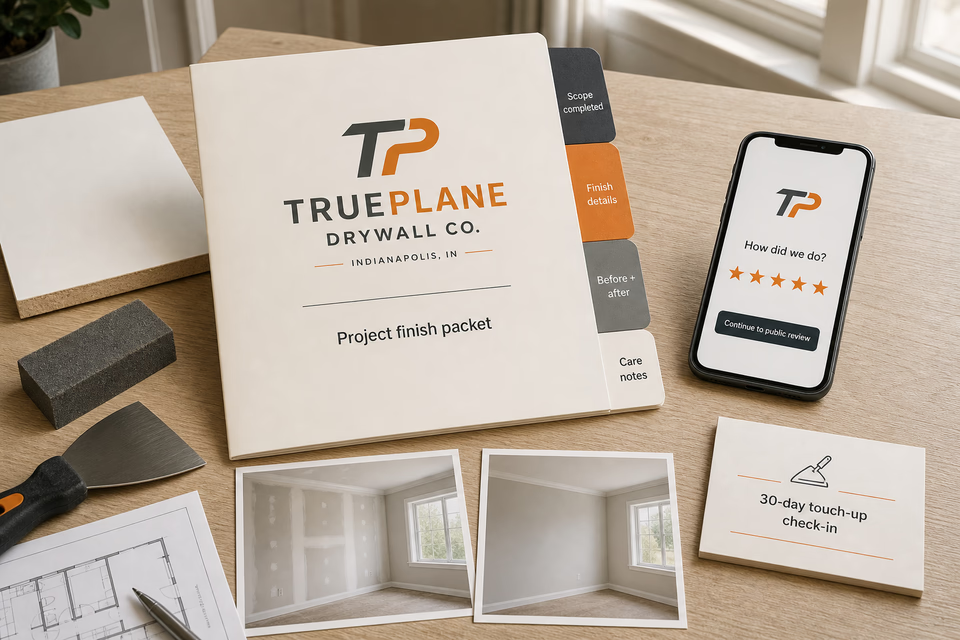
A useful closeout can organize the completed scope, finish details, before-and-after photos, care notes, customer feedback, and a restrained touch-up check-in without promising that every repair is invisible or that future movement cannot occur.
The drywall system
Three parts. One customer journey.
Each part is built around drywall installation, finishing, repair, texture matching, ceilings, and commercial build-outs, and every service below links to the full explanation of what it does.
01
Get found for the room, surface, and finish
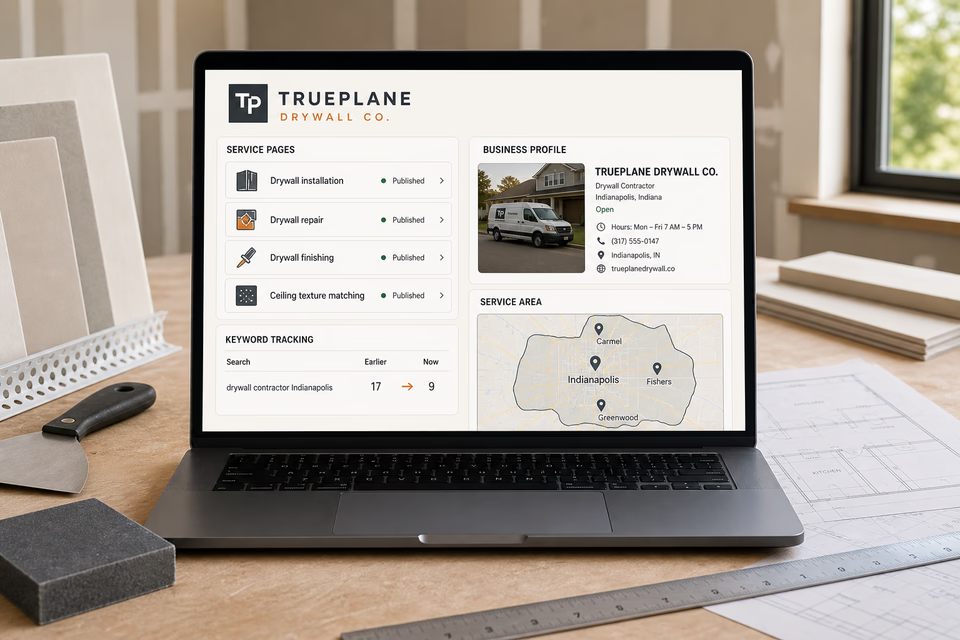
Give installation, repair, finishing, ceilings, and commercial work their own useful pages.
Build focused pages around the drywall services you actually perform, the project types you handle, the finish proof customers want to see, and the communities you truly serve. Keep local visibility and campaigns aligned with those same scopes.
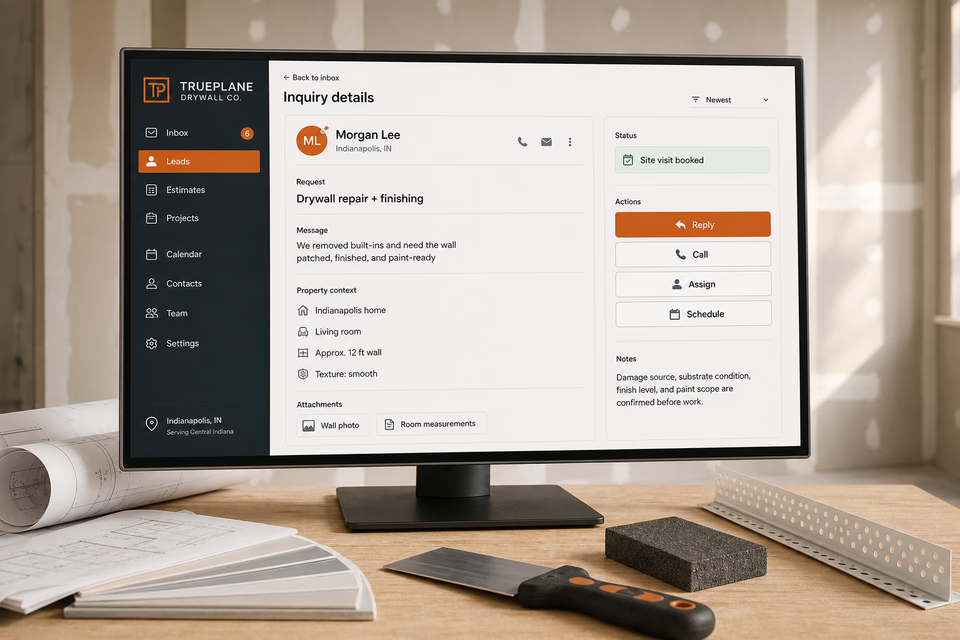
Keep measurements, damage context, finish expectations, access, and the walkthrough together.
A form, missed call, or message can become one owned conversation. Photos, room dimensions, ceiling height, existing texture, source-of-damage status, occupied-space notes, reply, assignment, and site-visit time stay attached for the office and field team.
Make the completed scope easier to review, reference, and follow up on.
Ask how the project went, make a public review easy, provide an organized finish packet with scope and photos, and send a restrained touch-up or referral message only when it fits the completed work and the company's actual policy.
New installation, patching, taping and finishing, ceiling work, texture matching, Level 5 work, residential projects, and commercial build-outs are different scopes. Each page should show relevant finish proof, explain what the contractor needs before a walkthrough or estimate, and clarify the handoff to framing, remediation, insulation, or painting when those services are outside the company's real offer.
Drywall installation
Drywall repair
Drywall taping + finishing
Ceiling drywall installation + repair
Ceiling texture matching
Level 5 drywall finishing
Basement drywall
New-construction drywall
Commercial drywall + tenant improvements
Water-damaged drywall replacement—after the moisture source is addressed
Sound-control drywall assemblies—only when genuinely part of your scope
Service-area pages for the communities you really cover
From search to the next job
The handoffs are the whole point.
The website should not end at a form, and a completed job should not end at an invoice. Each useful step gives the next person context.
01
They find the right service
A useful page or local listing matches the problem and gives the customer one obvious way to act.
02
The request stays alive
The call, form, or message lands in the same customer record with the service, location, and conversation attached.
03
A person owns the next step
The owner or office can reply, call, qualify, assign, and schedule with the history already in front of them.
04
The finished job keeps working
Feedback, reviews, print, referrals, and useful customer follow-up help one completed job create the next opportunity.
Drywall contractor questions, straight answers
Clear scope. Better finish records. No invisible-repair promises.
01Is this just a drywall contractor website package?
No. The website is the front door. The complete setup can connect calls, texts, forms, wall and ceiling photos, walkthrough requests, the shared inbox, scheduling, estimate follow-up, project communication, reviews, local search, ads, print, and branding around the way your drywall company actually handles work.
02Can the website give an exact drywall price from a photo?
No. A photo can help the team prepare, but price and scope may depend on dimensions, height, access, substrate condition, damage source, framing readiness, finish level, texture, occupied-space protection, materials, phases, and whether painting or other adjacent work is included.
03Can the page promise an invisible texture match or a permanently crack-free repair?
No. Show honest before-and-after proof and explain the matching and finishing process. Existing texture, lighting, paint, substrate condition, framing movement, moisture, and prior repairs can affect the final appearance and future performance.
04Should water damage, mold, framing, and painting all appear as drywall services?
Only when the company genuinely provides them. The site should state who confirms that a leak or moisture source is resolved, route suspected mold or hazardous-material concerns to appropriately qualified professionals, and clarify whether framing, insulation, priming, or painting is inside or outside the drywall scope.
Want to see the complete setup for your drywall contractor?
Bring the old site. Or the lack of one.
We will show you how the website, calls, messages, local search, reviews, and follow-up can work as one practical customer system.