The complete customer system for foundation contractors
Show the movement. Explain the evaluation. Keep the project moving.
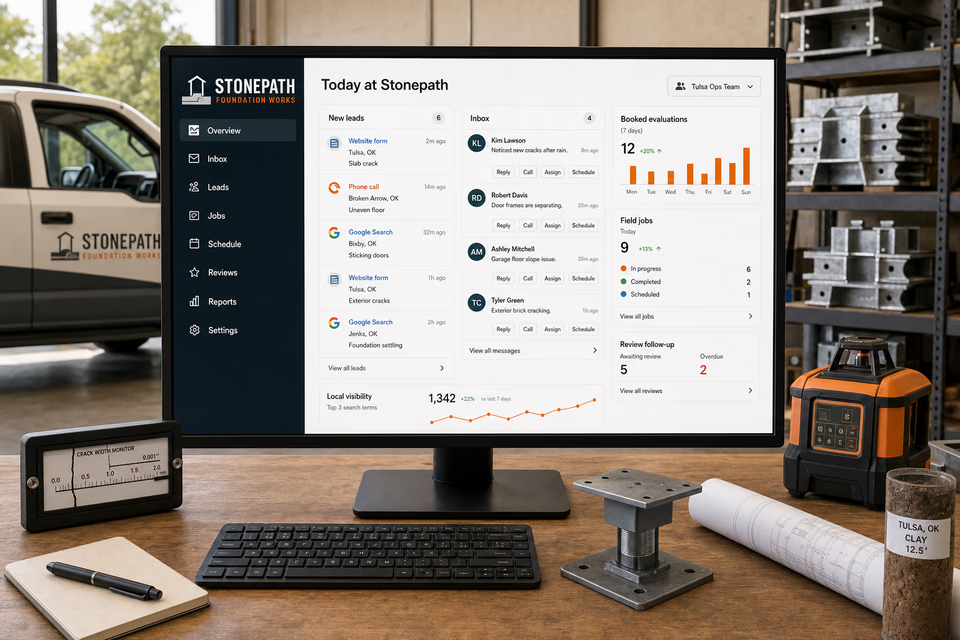
Foundation concerns are stressful, visual, and often tied to a major property decision. We connect the website, calls, messages, photos, site-evaluation details, reviews, and follow-up so customers understand the next step and the contractor keeps every property detail in one place.
Stonepath Foundation WorksWebsite, response, search, reviews, and follow-up
What the complete setup should do
Be useful before, during, and after the service call.
Cracks, sticking doors, uneven floors, bowing walls, and visible movement can have different causes and different repair paths. The customer system should organize symptoms, measurements, property conditions, access, and repair-method education without diagnosing the structure online, promising an outcome, or presenting the contractor as the engineer or approving authority.
01
Turn symptoms into a proper evaluation
The request path should gather the property address, visible symptoms, when they were noticed, photos, affected areas, and access details so the office can schedule the right kind of site visit without diagnosing from a form.
02
Separate the repair scopes clearly
Crack repair, piering, slab stabilization, wall reinforcement, crawl-space structural work, and new foundation construction need distinct explanations instead of one broad promise to fix every foundation problem.
03
Keep property proof together
Customer photos, floor plans, crack records, elevation readings, soil or drainage observations, site-access notes, and any requested engineering documents should stay attached to the same conversation.
04
Document the completed work
A useful closeout can organize the agreed repair scope, pier-location plan, relevant readings, project photos, care information, customer feedback, and any restrained future monitoring reminder.
The foundation system
Three parts. One customer journey.
Each part is built around foundation evaluations, crack repair, underpinning, slab stabilization, and structural repair, and every service below links to the full explanation of what it does.
01
Get found for the concern and the service
Give evaluations, crack repair, underpinning, and stabilization their own useful pages.
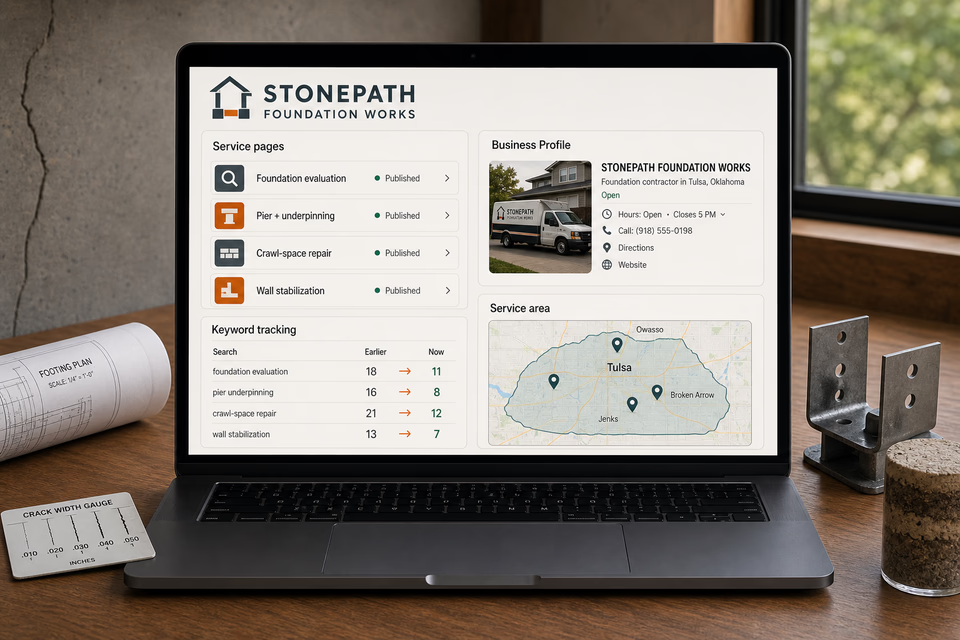
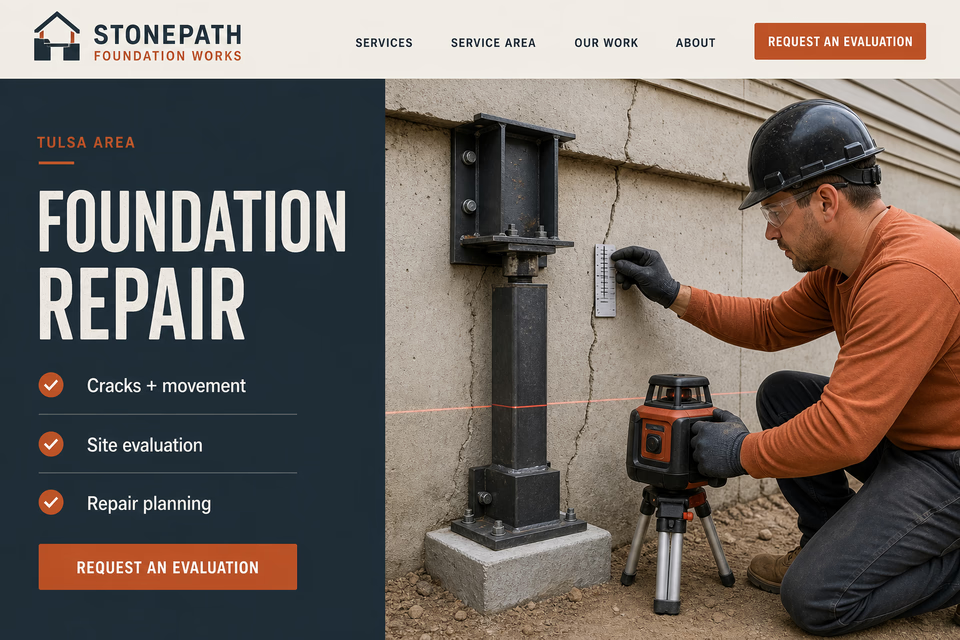
Build focused pages around real foundation symptoms, the repair methods you actually offer, the proof customers should prepare, and the communities you truly serve. Keep the local profile, search work, and campaigns pointed at those same scopes.
Hold onto the crack photos, address, access notes, and evaluation schedule.
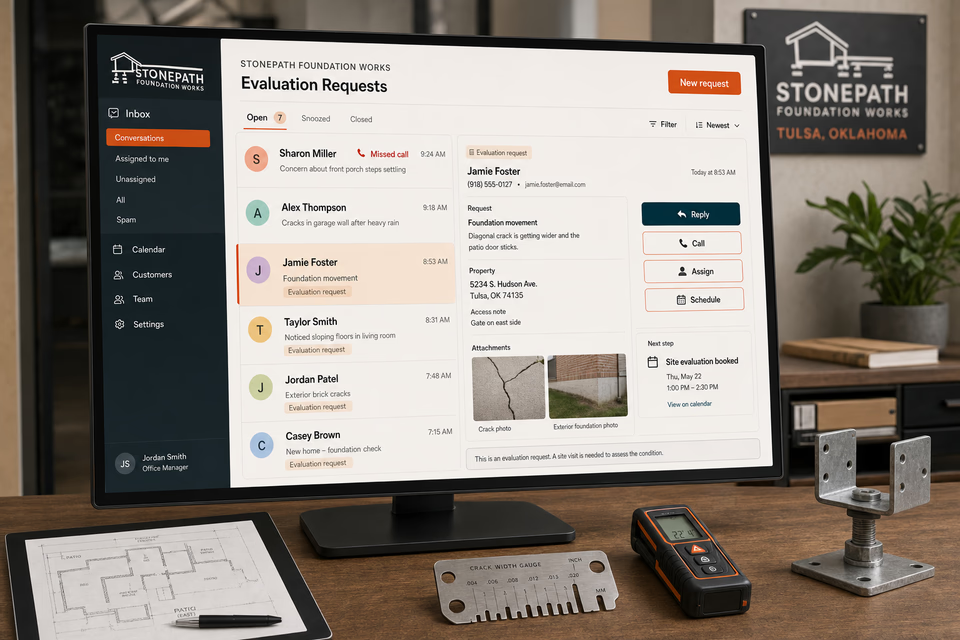
A form or call can become one owned conversation. The symptoms, affected rooms, property photos, contact details, gate or crawl-space access, reply, assignment, and site-evaluation time stay together for the office and field team.
Make the finished scope easier to understand, review, and reference.
Ask how the project went, make a public review easy, provide an organized repair summary with relevant readings and pier locations, and send restrained monitoring or annual check-in messages only when they fit the completed scope.
Crack repair, underpinning, slab stabilization, basement-wall work, crawl-space structural repair, and new foundation work are different scopes. Each page should clarify the situation it addresses, how a site evaluation begins, what proof helps, and what the next step is without collapsing everything into a generic foundation claim.
Foundation evaluations
Foundation crack repair
Piering + underpinning
Slab stabilization
Basement wall stabilization
Crawl-space structural repair
New foundation construction—when you truly offer it
Commercial foundation repair
Concrete slab lifting—when it is genuinely part of your scope
Service-area pages for the communities you really cover
From search to the next job
The handoffs are the whole point.
The website should not end at a form, and a completed job should not end at an invoice. Each useful step gives the next person context.
01
They find the right service
A useful page or local listing matches the problem and gives the customer one obvious way to act.
02
The request stays alive
The call, form, or message lands in the same customer record with the service, location, and conversation attached.
03
A person owns the next step
The owner or office can reply, call, qualify, assign, and schedule with the history already in front of them.
04
The finished job keeps working
Feedback, reviews, print, referrals, and useful customer follow-up help one completed job create the next opportunity.
Foundation contractor questions, straight answers
Clear symptoms. Careful evaluation. No forever promises.
01Is this just a foundation contractor website package?
No. The website is the front door. The complete setup can connect calls, texts, forms, property photos, evaluation requests, the shared inbox, scheduling, follow-up, reviews, local search, ads, print, and branding around the way your foundation company actually handles a project.
02Can the website diagnose a structural problem from photos?
No. It can collect symptoms, photos, affected areas, property details, and access notes so the contractor can prepare for a site evaluation. Some situations may also require a qualified engineer or another specialist before a repair scope is determined.
03Can the page promise a permanent repair or no future movement?
No. The site should explain the evaluation process, repair methods, documentation, and only the warranty the company actually provides. It should not promise that every cause is known in advance or that future movement is impossible.
04Should waterproofing appear on the same page as foundation repair?
Structural repair and water management can overlap, but they are not automatically the same service. Give each genuine offer a clear page, explain where coordination may be needed, and only claim waterproofing when the company actually provides it.
Want to see the complete setup for your foundation contractor?
Bring the old site. Or the lack of one.
We will show you how the website, calls, messages, local search, reviews, and follow-up can work as one practical customer system.